What's the Difference Between Orthopedic Casting Tapes and Plaster Bandages?
In orthopedic clinics and emergency departments, "applying a bandage" is an extremely common procedure. Although they're all called bandages, the materials fall into several categories: traditional plaster bandages, medical Orthopedic Casting Tapes that have become increasingly common in recent years, and soft bandages that don't harden and are mainly used for protection during the rehabilitation phase. What are their respective characteristics, and in what situations is each used? This article provides a general overview.
I. How Plaster Bandages Work
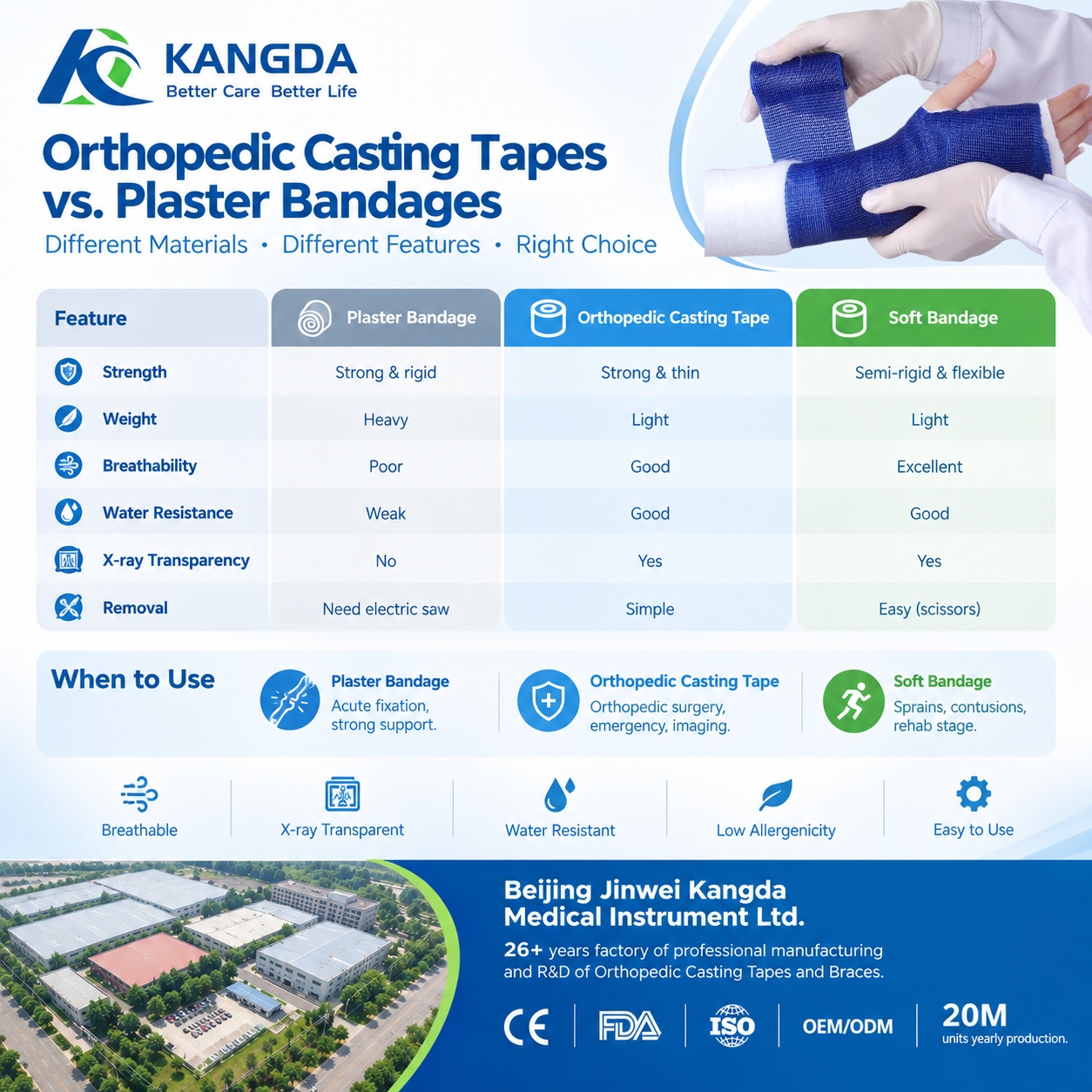
Plaster Bandages are made by attaching plaster powder to gauze. After being soaked in water, they are wrapped around the affected limb and harden through the hydration and crystallization of the plaster. Their advantages include firm shaping, strong support, and relatively controllable cost, and they have long been a classic solution for fracture external fixation.
Their drawbacks are equally obvious: they are heavy, have poor breathability, soften and deform easily when exposed to water, and usually require an electric saw for removal, limiting both patient experience and convenience for follow-up examinations.
II. How Medical Orthopedic Casting Tapes Are Made
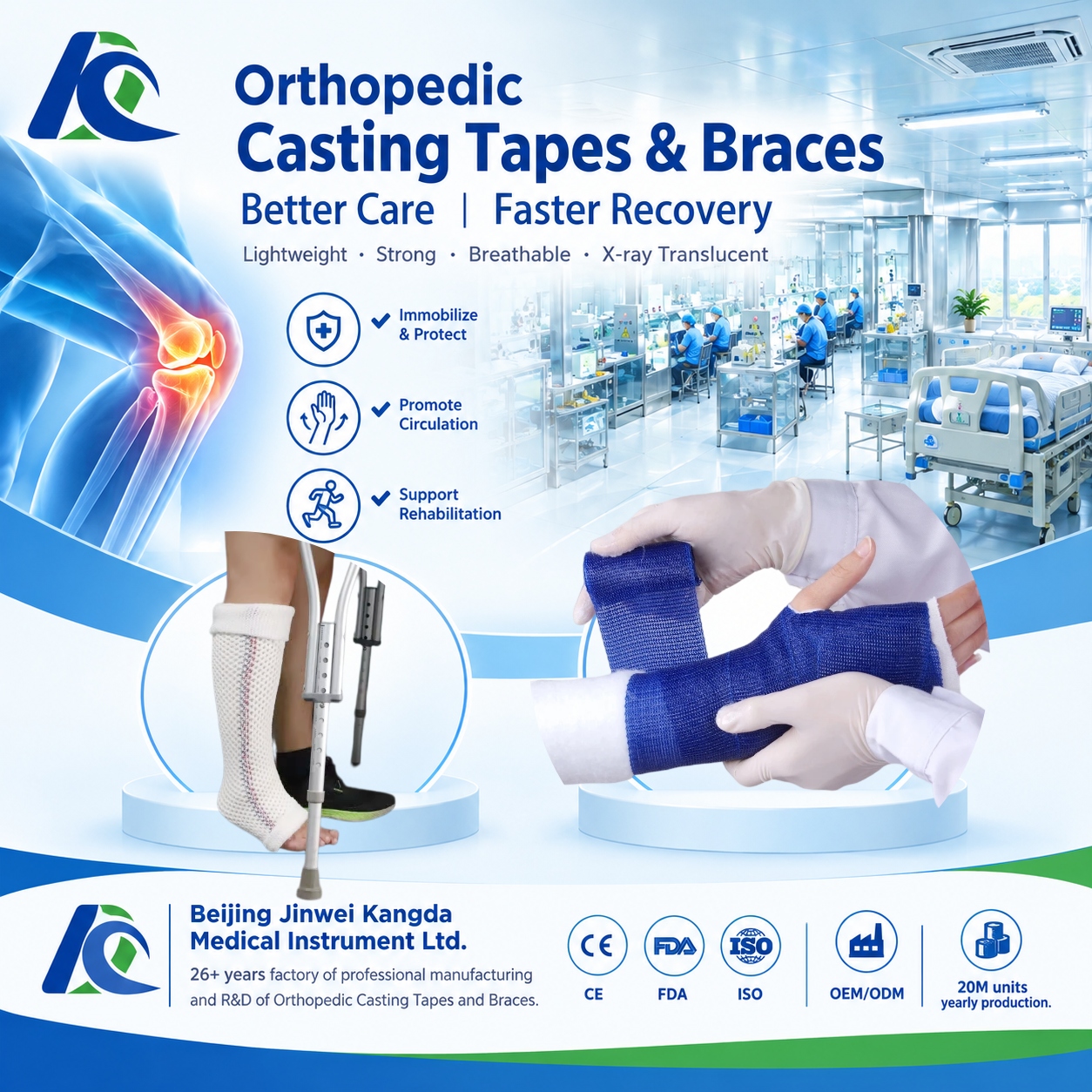
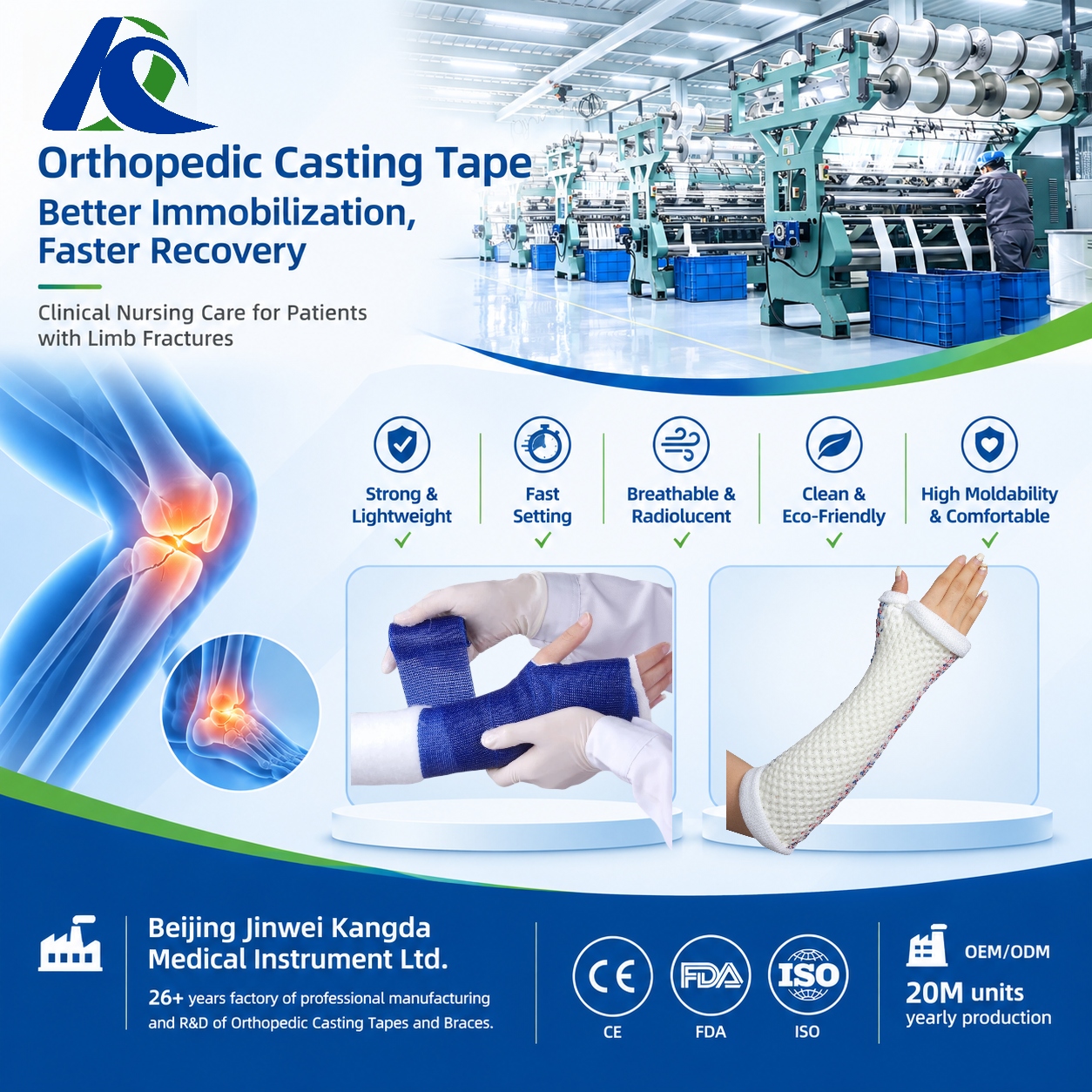
Medical Orthopedic Casting Tapes are typically made from fiber-based fabric impregnated with materials such as polyurethane. After being opened, they are soaked in room-temperature water for activation. Once wrapped around the affected area, they begin to harden within a few minutes, gradually forming an integrated external fixation. Because they cure through the material's own reaction rather than relying on plaster crystallization, they are thinner, lighter, and have a denser surface after setting.
They are mainly used for orthopedic external fixation, orthopedic surgery assistance, and emergency support in burn departments, and are one of the important alternatives to Plaster Bandages.
III. What Are Soft Bandages?
Medical polymer soft bandages, also known as semi-hard bandages, are different from other Orthopedic Casting Tapes which become very hard after curing. Instead, they become semi-hard and a bit soft after curing, with excellent elasticity. They are mainly used for minor fractures, sprains, contusions, and sports protection. There are various color options available. They can be easily removed using medical scissors. It can be regarded as a highly elastic, adjustable and re-elasticizable protective bandage material. In medical institutions in Europe, Asia, and Japan, these products are widely used in the rehabilitation care stage.
IV. Several Key Performance Characteristics of Orthopedic Casting Tapes
Breathability: The base fabric has a mesh-like microporous structure, which helps with skin heat dissipation and sweat evaporation, reducing stuffiness and itching.
X-ray transparency: Clearer projected images can be obtained during imaging examinations, making it possible to observe fracture conditions without removing the fixation.
Water resistance: After hardening, they do not soften or fall apart easily when exposed to water, giving patients greater ease in daily activities provided proper protection is taken.
Weight: They are significantly lighter than traditional plaster bandages, reducing the burden on the affected limb.
Low allergenicity: The material has little odor and low irritation, offering good skin tolerance.
Ease of operation: They can be used after soaking in room-temperature clean water, and begin to set within a few minutes after wrapping and shaping, relatively simplifying the operation process.
V. How to Choose: Look at the Site, the Stage, and the Needs
Simply put, for areas requiring high-strength rigid fixation during the acute phase, hardening Orthopedic Casting Tapes or splints are often chosen; for areas requiring frequent adjustment and mainly protection during the rehabilitation phase, soft bandages can be considered; for patients with higher requirements for breathability, lightness, and convenience of follow-up examinations, they can discuss with their doctor whether a polymer material solution is suitable. The tightness of any external fixation material directly affects peripheral blood circulation. If symptoms such as numbness, purpleness, or coldness in the fingers or toes occur after bandaging, medical attention should be sought immediately.