


Precautions for Caring for Patients with Fractures
1 After a fracture has been reduced and immobilized, special attention must be paid to whether the cast or splint is too tight. If signs of impaired blood circulation—such as severe swelling or a bluish skin tone—are observed in the area distal to the fracture (i.e., the fingers or toes), a doctor should be consulted immediately. Regularly inspect the skin at the edges of the cast or splint for signs of pressure; if redness or skin breakdown occurs, seek medical attention.
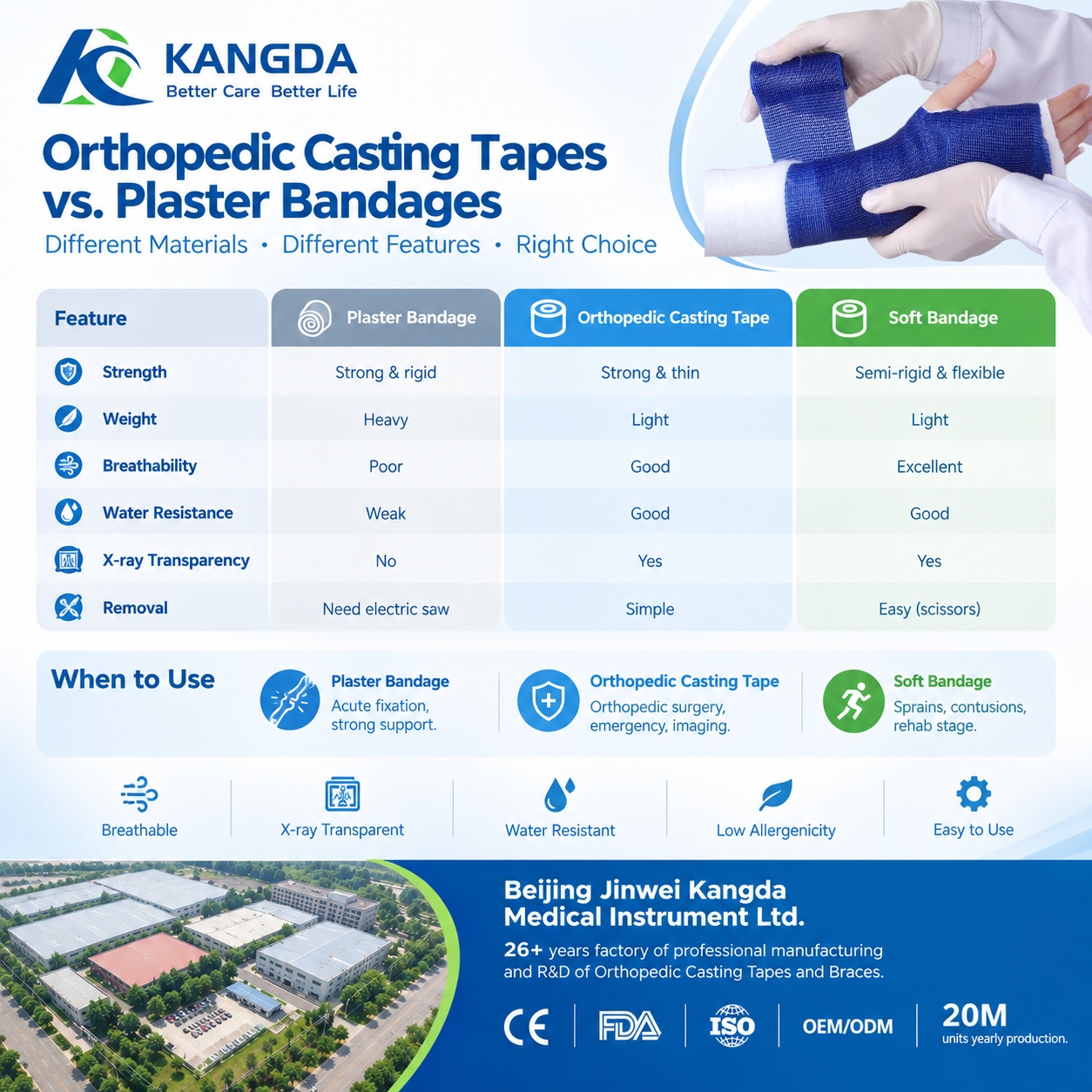
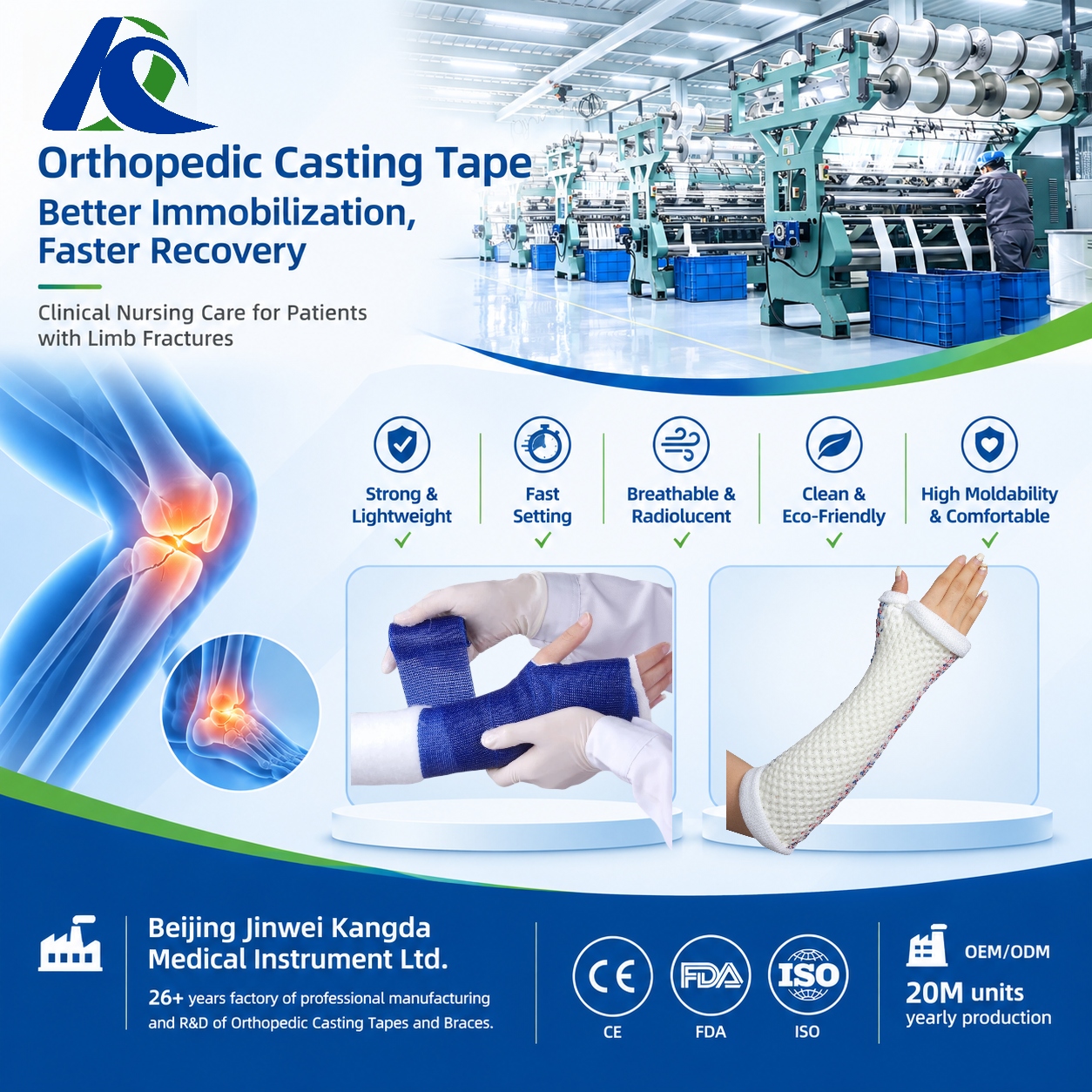
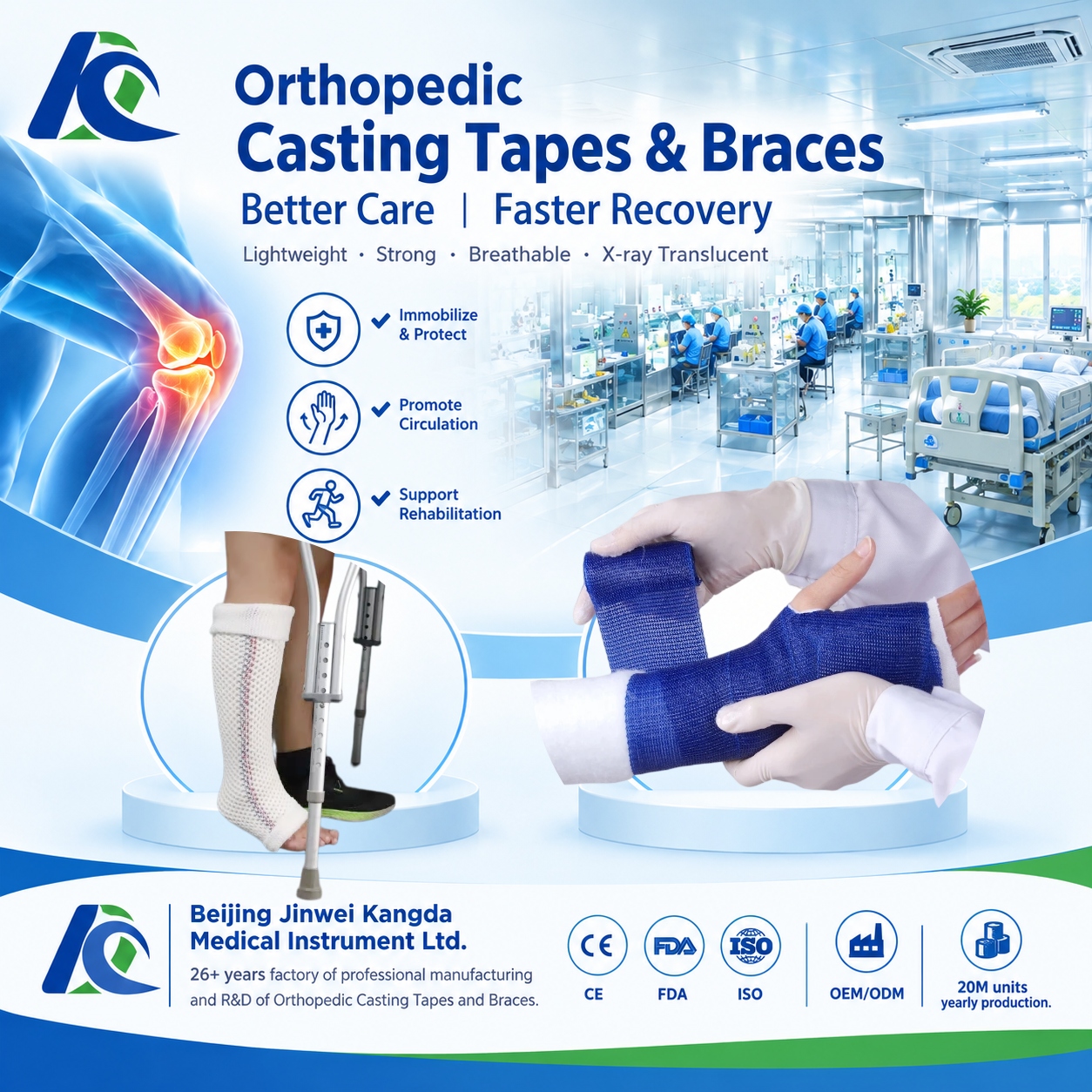
Orthopedic fiberglass casting tapeoffers numerous advantages: high strength (20 times that of traditional plaster bandages); X-ray translucency (allowing for clear imaging without removal); lightweight design (one-fifth the weight and one-third the thickness of plaster); good breathability (eliminating the itching and irritation often caused by other bandages); ease of use (application at room temperature, around 20°C, with rapid setting); moldability (good elasticity for shaping and integration); and environmental friendliness (dust-free removal with no pollution). In the early stages following the injury, the affected limb should be elevated to facilitate lymphatic and venous drainage and reduce swelling; monitor the blood circulation, skin color, temperature, swelling, sensation, and mobility of the fingertips or toes. For patients with skin wounds, a "window" should be cut into the fiberglass cast over the injury site—slightly larger than the wound itself—to facilitate observation and dressing changes. Because orthopedic Fiberglass Casting Tape is waterproof, retains its rigidity when wet, and is breathable, it allows for better skin hygiene and cleanliness, helping to prevent complications such as eczema or skin infections. Its lightweight nature makes the patient feel more comfortable, facilitating care activities such as turning the patient and performing functional exercises. Therefore, this characteristic can be leveraged to enhance both active and passive functional exercises, thereby promoting functional recovery following a fracture and facilitating early healing and rehabilitation for patients with limb fractures.
2 Following a fracture, the affected limb should be elevated (using pillows to prop up the injured limb) to promote blood circulation and prevent excessive swelling.
3 Patients confined to bed for extended periods after a fracture should sleep on a firm wooden bed; additionally, they should be turned regularly and have pressure-prone skin areas massaged to prevent the development of pressure ulcers (bedsores).
4 Strengthening functional exercises is also crucial; patients should get out of bed and move about as soon as their physical condition permits. For those unable to leave their beds, limb exercises should be performed while lying down to stimulate blood circulation, which aids in fracture healing and functional recovery.
5 Family members should attend to the patient's daily needs and diet, ensuring adequate nutrition through the regular consumption of high-protein and high-vitamin foods. Bone broth should be consumed frequently to supplement calcium intake.
6 Nursing care should also focus on protecting bony prominences. Caregivers should monitor these areas for signs of significant pressure or discomfort, adjusting the position and thickness of padding as needed to prevent local irritation, skin breakdown, or pressure ulcers.
Discussion
Compared to traditional plaster casts, orthopedic Fiberglass Casting Tape offers numerous advantages: it is strong, lightweight, and breathable, with a short curing time and X-ray translucency. It is clean, hygienic, and environmentally friendly, offering excellent moldability and ease of use without causing irritation or allergic reactions. These qualities significantly improve patient comfort. Consequently, it is clearly superior to traditional plaster immobilization, facilitating better nursing care for patients with immobilized limb fractures. Orthopedic Fiberglass Casting Tape exhibits excellent moldability and flexibility, and the cut edges remain neat. Its adhesiveness and exothermic temperature during curing are optimal, and it undergoes minimal shrinkage after hardening, effectively eliminating discomfort such as skin tightness or itching at the injury site.
Author Affiliation: Department of Surgery, Kaiping Traditional Chinese Medicine Hospital