
Protect Your Cervical Spine: Choosing the Right Product Matters
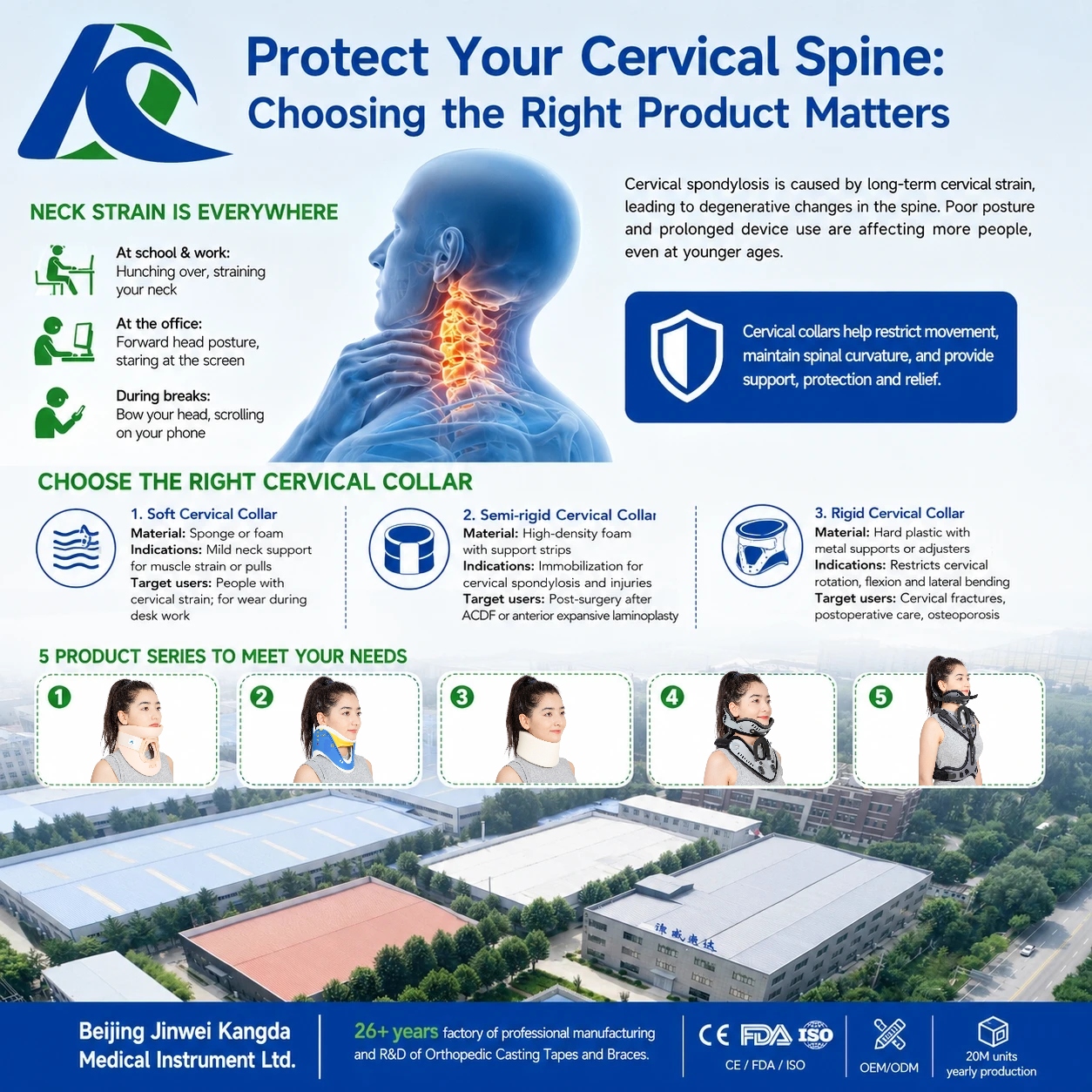
Human necks are under more and more strain these days.
At school: hunching over books, straining your neck;
At work: forward head posture staring at the computer, straining your neck;
During breaks: bowing your head scrolling on the phone, straining your neck;
Cervical spondylosis is a disorder caused by degenerative pathological changes in the cervical spine. It mainly occurs due to long-term cervical strain, osteophyte formation, intervertebral disc herniation, ligament hypertrophy and other conditions that compress the cervical spinal cord, nerve roots or vertebral arteries.
As poor postures such as desk work and phone use have become commonplace, cervical spondylosis and neck injuries affect a growing number of people, even trending younger. Many individuals suffer from neck discomfort.
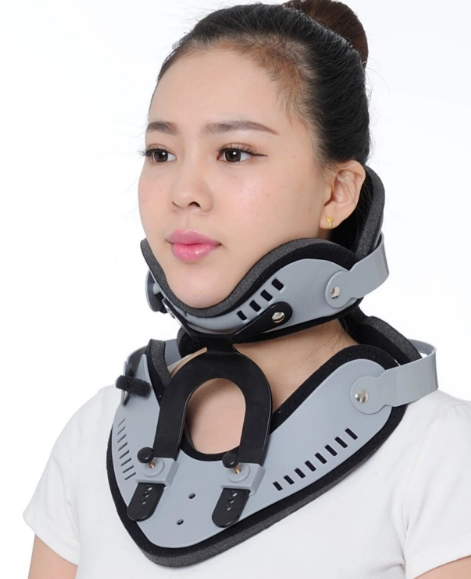
Cervical Collars are one of the most common assistive devices for relieving and managing various cervical conditions. They effectively restrict neck movement, maintain the normal physiological curvature of the cervical spine, and offer protection, immobilization and support for the neck. Cervical Collars available on the market can be roughly divided into the following categories:
1. Soft Cervical Collar
Material: Flexible materials such as sponge or foam Indications: Mild cervical support for neck muscle strain or pulls Target users: People with cervical strain; for wear during desk work

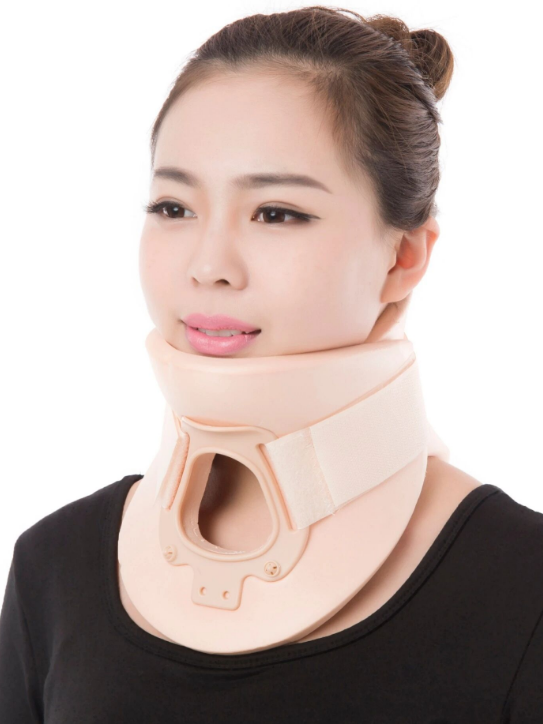
2. Semi-rigid Cervical Collar
Material: High-density foam combined with semi-rigid support strips Indications: Immobilization for cervical spondylosis and neck injuries; limits cervical flexion and rotation, providing immobilization and motion restriction Target users: Patients after anterior cervical discectomy and fusion, or anterior cervical expansive laminoplasty
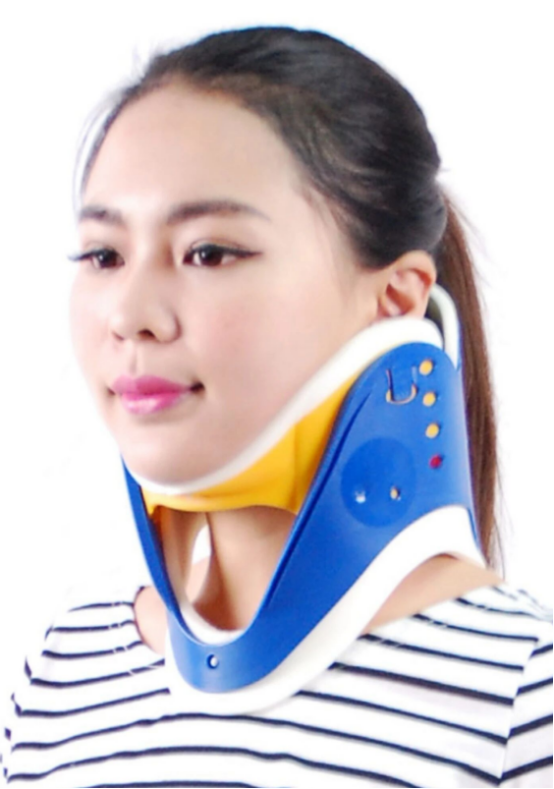
3. Rigid Cervical Collar
Material: Hard plastic fitted with metal supports or adjusters Indications: Restricts cervical rotation, flexion and lateral bending Target users:
Conservative treatment of cervical fractures
Long-term postoperative care following anterior or posterior cervical surgery
Postoperative protection for patients with cervical conditions combined with osteoporosis
Wearing Misconceptions
Wear Cervical Collars correctly to safeguard your cervical health!
Misconception 1: Cervical Collars can cure cervical spondylosis
In fact, they are not magic gadgets that eliminate cervical spondylosis once worn. They act as a helper for your neck, reducing neck load and relieving pain to a certain extent, but cannot cure cervical spondylosis. Patients with cervical spondylosis should seek timely professional medical treatment.
Misconception 2: Any Cervical Collar will work
You need to select a Cervical Collar based on your specific condition. Different collars suit different people and ailments. Picking a collar is like choosing shoes — it has to fit properly. Wearing an ill-fitting collar is just like wearing ill-fitting shoes and may cause more harm.
Misconception 3: The longer you wear the collar, the better
You should not wear a Cervical Collar for excessively long periods. If your neck constantly relies on external support, neck muscles remain inactive. Over time, muscles will weaken, and neck issues may worsen. It is recommended to gradually reduce wearing time once pain eases.
Misconception 4: Wearing a Cervical Collar solves everything
A cervical collar only relieves symptoms temporarily. To truly improve cervical health, you also need to maintain good posture and do regular neck exercises.