2026 Top Medical Tape Types for Effective Wound Care?
In the world of wound care, choosing the right supplies is vital. Medical tape plays an essential role in securing dressings and preventing further injury. Various types of medical tape are available, each with unique features.
Understanding these options can greatly enhance treatment efficiency. For example, adhesive types vary in strength, durability, and flexibility. Some are designed for sensitive skin, while others offer waterproof protection. The decision isn't straightforward; individual needs matter.
While many trust common tape options, shortcomings exist. Some tapes may irritate the skin or fail to stick well in critical situations. It’s important to consider these factors. Emphasizing the proper use of medical tape can lead to better outcomes in wound care. Selecting the right type requires careful thought and understanding.
Overview of Medical Tapes and Their Importance in Wound Care
In wound care, medical tapes play a crucial role. They secure dressings and hold medical devices in place. Choosing the right tape can make a significant difference in healing. Each type of tape has unique features suited for various needs.
Adhesive strength is essential. Some patients may experience skin irritation from certain adhesives. Testing different types can help find a suitable option. For example, hypoallergenic tapes may work better for sensitive skin. It's important to monitor how the skin reacts over time.
The breathability of the tape is also vital. Tapes that allow air circulation can promote faster healing. However, they may not stick as well under certain conditions. Balancing adhesion and skin health requires careful consideration. Understanding the specific requirements for each wound type is key.
Types of Medical Tapes: Adhesive, Non-Adhesive, and Specialty Options
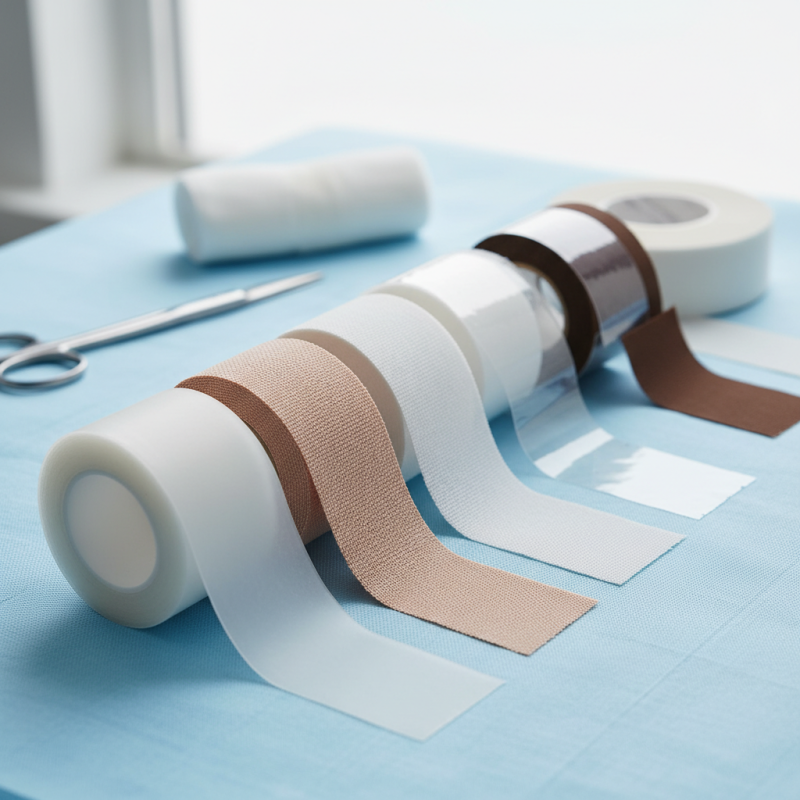
When it comes to wound care, choosing the right medical tape is crucial. There are primarily three categories: adhesive, non-adhesive, and specialty tapes. Adhesive tapes are the most commonly used. They provide a strong hold and are ideal for securing dressings. A study by the Journal of Wound Care noted that proper adhesion significantly reduces the risk of infection. Tapes with hypoallergenic properties are particularly beneficial for sensitive skin, as they minimize irritation while maintaining effective wound closure.
Non-adhesive options are also gaining traction. They often feature foam or gauze materials. These tapes can soften the impact on delicate areas, allowing for more comfortable wear. However, they may not provide the same level of security as adhesive types. According to a survey by Wound Management, 25% of healthcare professionals reported challenges in using non-adhesive options consistently. Specialty tapes cater to unique needs. They can include waterproof varieties or those designed for specific applications, like surgeries or sports injuries.
Despite the advancements, mistakes still happen. Misapplication of tape can lead to complications, such as skin tears or delayed healing. A report from the Institute for Healthcare Improvement emphasizes the need for training to reduce errors. Healthcare providers must continuously assess their choices. Realizing that not all tapes may suit every patient is vital. Those responsible for wound care should remain informed about the latest research and best practices in medical tape selection.
2026 Top Medical Tape Types for Effective Wound Care
| Type of Medical Tape |
Adhesive Type |
Key Features |
Common Uses |
| Fabric Tape |
Acrylic |
Flexible, Durable, Breathable |
Securing dressings, sports injuries |
| Paper Tape |
Water-based |
Gentle on skin, Easy to tear |
Sensitive skin, securing light dressings |
| Silicone Tape |
Silicone |
Gentle removal, Reduces skin trauma |
Chronic wounds, sensitive skin |
| Hydrocolloid Tape |
Hydrocolloid |
Moisture-retentive, Flexible |
Wound healing, blister prevention |
| Clear Plastic Tape |
Acrylic |
Waterproof, See-through |
Covering and protecting wounds |
Key Features and Benefits of Each Medical Tape Type
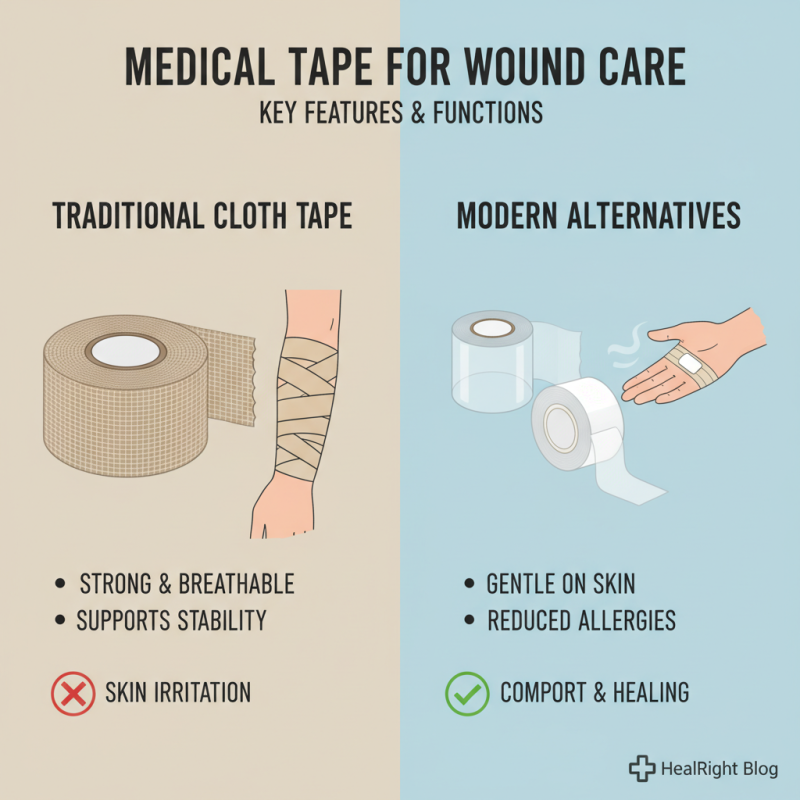
When selecting medical tape for wound care, understanding key features is crucial. Different types serve various functions, impacting healing efficiency. Traditional cloth tape is strong and breathable. It supports wound stability well. However, it can cause skin irritation for some patients, especially after prolonged use.
Another option is paper tape. It's gentle on the skin and easy to tear. Ideal for sensitive skin, this tape minimizes discomfort. Studies indicate that about 30% of patients experience allergic reactions to certain adhesives. Therefore, paper tape may prevent such issues.
Silicone-based tape is gaining popularity. This type reduces pain during removal, making it patient-friendly. A report from the Wound Healing Society notes that it can improve adherence by 20% compared to traditional tape. Yet, silicone tape can be more expensive. Users must weigh the benefits against the cost. Each type of tape presents unique advantages and drawbacks. Determining the right one is essential for effective wound management.
Best Practices for Applying Medical Tape for Optimal Wound Healing
Applying medical tape correctly is crucial for optimal wound healing. Studies show that poor application can lead to skin irritation and infection. A report from the Wound Care Coalition indicates that up to 30% of patients experience complications related to tape usage. This statistic highlights the importance of understanding how to use tape effectively.
When applying medical tape, ensure the skin is clean and dry. This simple step can prevent adhesive failure. It’s also essential to avoid stretching the tape during application. Stretched tape can create tension that leads to skin tears. Many healthcare professionals overlook this detail, which can result in adverse outcomes. A proper fit minimizes discomfort and reduces the risk of blisters.
Regular monitoring of the taped area is key. Look for signs of redness, swelling, or other issues. Adjust the tape if any irritation occurs. Communication with patients about their comfort level is vital. Some tapes may cause allergic reactions, and patient feedback can guide adjustments. Emphasizing these considerations can lead to better healing outcomes.
Future Trends in Medical Tape Technologies for Enhanced Care
The future of medical tape technology promises exciting advancements. Innovations aim to enhance wound care with improved adhesion and breathability. Some materials will feature enhanced moisture management, reducing the risk of infection. Biodegradable options are also gaining traction, addressing environmental concerns.
Smart tape technology is on the horizon. It can monitor wound conditions in real-time. Sensors embedded in the tape track moisture levels and temperature. However, the complexity of integrating these technologies presents challenges. Affordability and accessibility remain important considerations.
Translating these high-tech innovations into practical applications is not simple. The effectiveness of new materials must be tested rigorously. User comfort and dermatological safety must not be overlooked. As the industry evolves, staying aware of the balance between innovation and practicality is vital.