How to Choose the Best Plaster Bandage for Your Needs?
Choosing the right Plaster Bandage can greatly affect the healing process. The market offers a variety of options. Each type has unique benefits and limitations. According to a report by Global Market Insights, the plaster bandage market is projected to reach $1 billion by 2025. This growth highlights the importance of making informed choices.
Dr. Emily Carter, a renowned expert in medical supplies, once stated, "The right plaster bandage can significantly speed up recovery and enhance comfort." This underscores the need for comprehensive knowledge about different bandages. Some may offer durability but lack flexibility, while others might excel in comfort but fail to provide adequate strength.
When selecting a Plaster Bandage, consider the specific requirements of your situation. It’s crucial to think about factors such as application technique and desired outcome. However, many overlook the importance of material quality. Not all bandages are created equal, and poorly made options can lead to complications. Evaluating these aspects can prevent potential setbacks in your recovery journey.
Understanding Different Types of Plaster Bandages Available in the Market
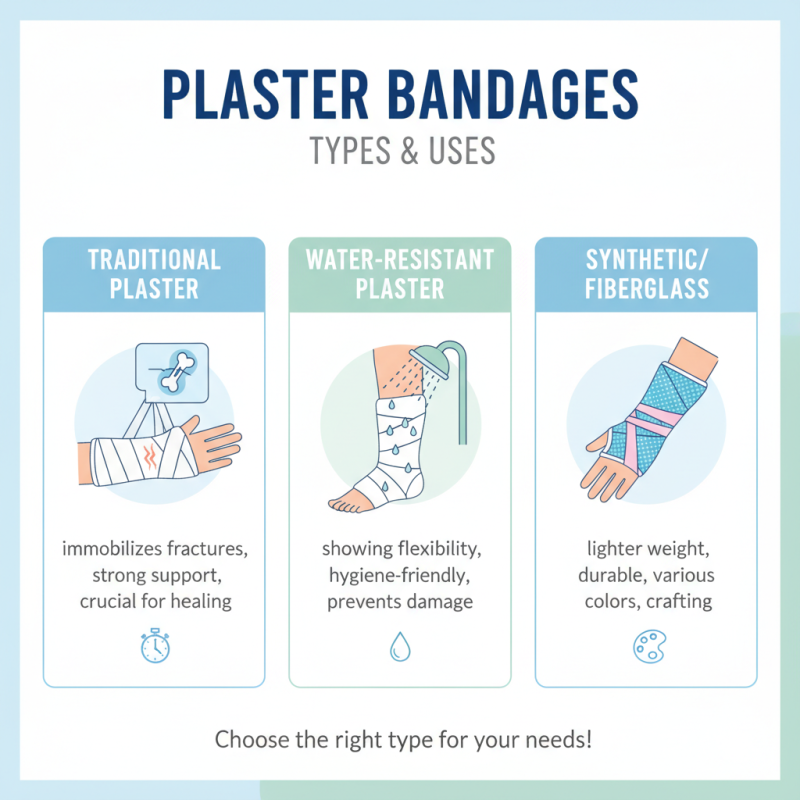
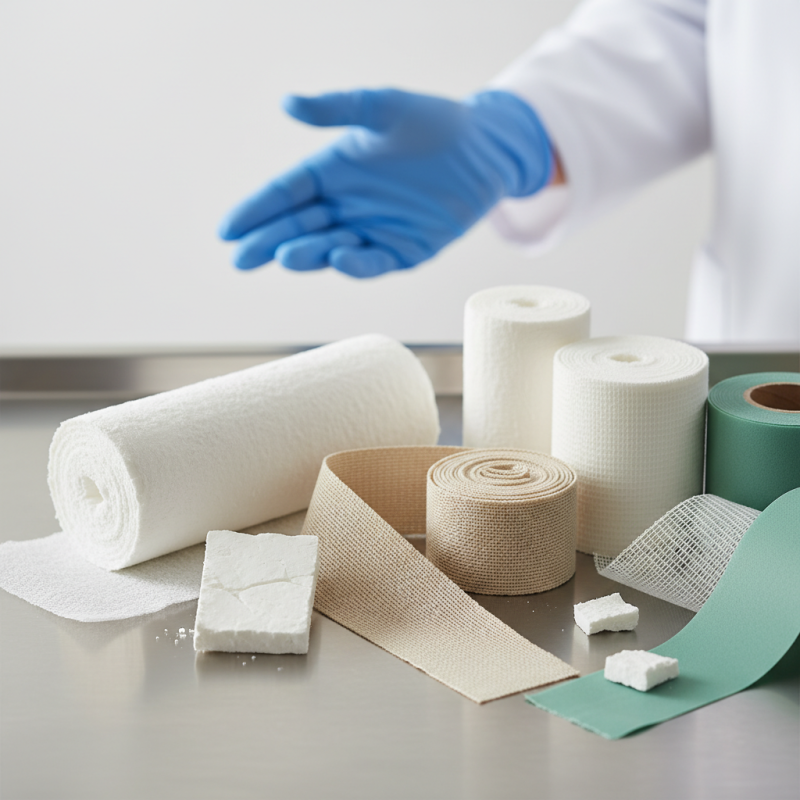
Choosing the right plaster bandage involves understanding the various types available. Each type serves a different purpose, catering to diverse medical and crafting needs. Traditional plaster bandages are excellent for immobilizing fractures. They provide a sturdy hold, crucial for proper healing. Water-resistant options are ideal for patients who need showering flexibility. These prevent damage to the bandage while allowing hygiene.
For sports enthusiasts, there are lightweight options. They offer excellent support without excessive bulk. These bandages are breathable, helping to reduce moisture buildup. Flexible plaster bandages are great for intricate body areas. They can conform to curves and shapes, providing comfort during movements.
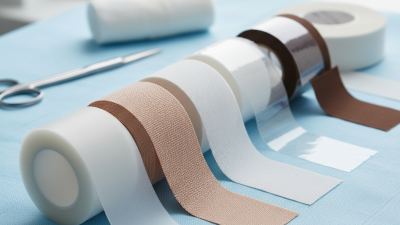
Consider the adhesive quality as well. Some bandages stick better than others, affecting overall usability. Choose a bandage that fits your specific activity or medical requirement. Reflecting on the specific needs helps to ensure optimal support and healing. Not every option will suit everyone, so trial and error might be necessary.
Evaluating Key Factors for Selecting the Right Plaster Bandage
When selecting a plaster bandage, there are several key factors to consider. The first aspect is the intended use. Are you applying it for medical purposes or for arts and crafts? This decision significantly impacts the type of bandage required. The thickness and absorbency of the bandage can also vary. Thicker bandages offer more support, while thinner ones are ideal for delicate applications.
Another factor is drying time. Some bandages set quickly, while others take longer to harden. Quick-setting bandages are useful for emergencies, but they may not allow for adjustments. Choosing the right setting time can be tricky, as different situations call for different needs.
Tips: Ensure the bandage is compatible with skin types. If you or your patient has sensitive skin, opt for hypoallergenic options. Test the bandage on a small skin area first. Another important consideration involves storage conditions. Improper storage can affect the bandage's integrity. Keep it dry and away from excessive heat.
Ultimately, the selection process may involve trial and error. It can be beneficial to seek advice from professionals or experienced users. Learning from these insights can lead to better decisions in the future.
Assessing the Quality and Durability of Plaster Bandages
Choosing the right plaster bandage can significantly impact the effectiveness of your project. Quality matters. When assessing plaster bandages, look for materials that offer strength and flexibility. The durability of plaster depends on the formulation and the manufacturing process. A consistent thickness across the bandage is essential. Uneven thickness can lead to weak spots when molded.
Inspect the water absorption rate as well. High-quality bandages absorb water evenly, which allows for better setting and adherence. Conversely, inferior products may absorb unevenly, resulting in a fragile outcome. Remember, color can also be an indicator. Bandages with additives for quicker drying may have a different hue. Be cautious; quick-drying doesn't always mean better quality.
It's also wise to consider user reviews. Look for feedback on durability in varied conditions. Experience shared by others can reveal insights not immediately apparent. A bandage that performs well in a controlled environment may struggle under real-world conditions. This reflection can guide your choice, leading you to a more reliable product.
How to Choose the Best Plaster Bandage for Your Needs? - Assessing the Quality and Durability of Plaster Bandages
| Type |
Material Composition |
Durability Rating |
Water Resistance |
Setting Time |
Application Use |
| Plaster of Paris |
Gypsum |
High |
Low |
10-15 minutes |
Orthopedic casts |
| Fiberglass |
Fiberglass resin |
Very High |
High |
1-2 hours |
Sports medicine, fractures |
| Soft Casts |
Elastic materials |
Medium |
Medium |
N/A |
Sprains, strains |
| Moldable Plaster |
Plaster and additives |
High |
Low |
5-10 minutes |
Custom shapes, sculptures |
Exploring Application Techniques for Various Plaster Bandages
When selecting a plaster bandage, the application technique plays a critical role in achieving the best results. For a smooth finish, ensure the skin is clean and dry before applying the bandage. Cut the material into manageable strips, making application easier. It’s essential to soak the bandage thoroughly in water but avoid soaking it for too long, as oversaturation can weaken its structure.
Tips: Practice your technique on a practice surface. This helps build confidence before working on an actual project. Be aware of how the bandage sets. If left too loose, it may not adhere properly. If it is too tight, you risk restricting movement.
Another technique involves layering. Begin with a base layer of plaster bandage, allowing it to dry slightly before adding additional layers. This approach adds strength and durability. Be mindful of the space between layers; too little can trap air bubbles, while too much might weaken the overall structure.
Tips: Keep a damp sponge handy to smooth surfaces during application. It can help you correct mistakes or create a polished look. Always check the alignment and texture before the bandage fully sets. Imperfections can lead to issues later on, so take your time with this step.
Considering Cost-Effectiveness and Brand Reputation in Your Choice
Choosing the right plaster bandage can influence your project’s outcome. Cost-effectiveness plays a crucial role in this decision. While cheaper options may seem attractive, they often compromise on quality. Assess the longevity and durability of the product. Spending a bit more upfront on a reliable plaster bandage can save you time and expenses later.
Brand reputation carries weight, too. Established brands often have a history of reliable performance. Look for user reviews and recommendations. These insights provide valuable information on durability and ease of use. However, be cautious of marketing claims. Just because a brand is popular does not guarantee it meets all your needs.
Reflect on your specific requirements. Are you working on a large project or a small repair? Your choice may differ based on scale. Consider testing a small quantity before committing fully. This can help ensure it aligns with your expectations, both in functionality and budget.