What Are the Best Medical Boots from China?
Choosing the best Medical Boots from China requires more than comparing prices or attractive product photos. A reliable boot should support the intended clinical purpose, fit securely, and remain comfortable during daily movement. Materials, stitching, sole design, adjustability, and cleaning requirements all deserve close attention. Small details matter.
China has a broad medical footwear industry, including manufacturers producing walking boots, postoperative shoes, fracture boots, and protective orthopedic footwear. Some suppliers offer strong factory controls, documented testing, and private-label production. Others may provide limited technical information. This difference can affect product consistency, sizing accuracy, and long-term safety.
A careful evaluation should examine the manufacturer’s experience, quality system, material specifications, and product testing records. Buyers should request clear photographs, sample units, inspection reports, and traceable production details. A practical sample test can reveal whether straps hold firmly, the sole bends appropriately, and the lining causes pressure points after several hours. Clinical professionals should confirm suitability for specific patients or recovery stages.
There is no single best option for every user. A rigid boot may provide stability, yet it can feel heavy on stairs. A lightweight design may improve mobility, but perhaps offer less protection. This trade-off deserves honest attention. Supplier communication also matters, especially when discussing sizing charts, replacement parts, packaging, and after-sales support.
This guide compares important Medical Boots features and supplier qualities. It focuses on evidence rather than marketing language. Some product claims may still require independent verification. That is an important limitation. Reliable decisions come from combining professional advice, hands-on inspection, and transparent manufacturer information.
What Makes a Medical Boot Suitable for Clinical Use?
A medical boot suitable for clinical use must protect healing tissue without creating new risks.
WHO reports that one in ten patients is harmed during healthcare, with more than half of these events considered preventable.
Secure fit matters. A loose boot can shift during transfers, while excessive pressure may irritate swollen skin.
Look for a rigid or semi-rigid sole, adjustable straps, and a contoured interior.
The heel should remain stable when the patient walks slowly. Edges must feel smooth against socks and dressings. The boot should also be light enough for weak patients.
Too heavy.
Clinical cleaning is another practical test.
Surfaces should resist moisture, blood, and common disinfectants without cracking. Removable liners help staff inspect skin and control odor.
However, washable does not always mean disinfectable. Suppliers should provide validated cleaning instructions, not vague claims.
For Chinese-made medical boots, buyers should request material certificates, batch traceability, and risk-management records aligned with ISO 14971.
Quality systems based on ISO 13485 can also show controlled design and production processes. ASTM and ISO footwear testing may support claims about sole durability, slip resistance, and materials, but those tests do not automatically prove clinical suitability.
Ask for evidence from the intended use. In my experience, comfort claims often receive more attention than pressure checks. That balance deserves review.
A short fitting trial, documented by clinicians, can reveal strap failures, heat buildup, or walking instability before routine use.
Which Types of Medical Boots Are Made in China?
China produces several practical types of medical boots, not one universal design.
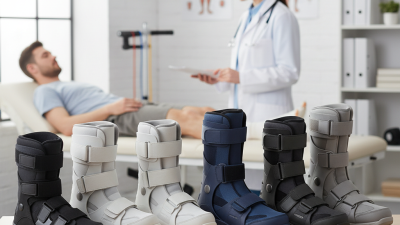
Common categories include short walking boots, tall fracture boots, pneumatic CAM boots, postoperative shoes, and diabetic off-loading boots. Short boots suit ankle sprains and minor fractures. Tall versions stabilize injuries reaching the lower leg. Pneumatic models use air chambers for adjustable support, although inflation may feel uneven between users. Postoperative shoes protect bandaged feet. Diabetic boots require extra depth, soft interiors, and pressure distribution.
The World Health Organization’s Global Report on Assistive Technology estimates that more than 2.5 billion people need at least one assistive product today. That figure may exceed 3.5 billion by 2050. This demand supports China’s broad production capacity, especially for molded shells, breathable liners, hook-and-loop closures, and replaceable soles. China’s National Medical Products Administration also emphasizes risk-based device management, so buyers should check the product’s intended classification, testing records, and traceability.
In real purchasing work, fit matters more than appearance.
Measure foot length, calf width, swelling, and the space needed for dressings. Look for rigid hinges, rounded edges, washable liners, and secure straps. ISO 13485 quality systems and ISO 14971 risk-management records add useful evidence, but certificates alone do not guarantee comfort. That shortcut still fails. Some low-cost boots use thin liners that compress quickly. Others restrict toe movement unnecessarily. A trial fitting, pressure check, and clinician’s assessment remain important, especially for diabetic or postoperative users. The WHO data is broad, not boot-specific, so product claims still need careful verification.
How to Compare Materials, Comfort, and Protective Features
What Are the Best Medical Boots from China?
The best medical boots balance cleanability, comfort, and reliable protection. In my experience, smooth PU or coated microfiber resists splashes and wipes clean quickly. Full mesh feels cooler, but it may absorb fluids and hold odors. A rubber outsole should provide steady grip on wet hospital floors. EVA midsoles reduce fatigue during long shifts, although very soft foam can lose support over time. Check the stitching, seams, and bonding around the sole. Small gaps become serious problems after repeated washing.
Comfort depends on fit, not appearance. Measure both feet and compare the supplier’s size chart carefully. Look for a roomy toe box, stable heel counter, and flexible forefoot. Removable insoles can help with cleaning and personal support. Protective features may include reinforced toes, slip-resistant tread, water resistance, and anti-static construction. However, these features must match documented testing. A thick toe cap is not automatically safer. It can also create pressure during twelve-hour shifts.
Tips: Request physical samples before placing a large order. Wear them on hard floors for several hours. Test grip with clean water, then inspect the outsole. Ask for material specifications, test reports, washing guidance, and size consistency records. Supplier claims can be incomplete. Recheck everything independently. A boot may pass one test yet feel uncomfortable in daily clinical work. That difference matters.
Which Chinese Medical Boot Standards and Certifications Matter?
When evaluating medical boots from China, certification matters more than a polished product photo. For devices used after fractures, surgery, or ankle injuries, ask whether the manufacturer holds a valid ISO 13485 certificate. ISO’s 2022 Survey recorded 38,654 ISO 13485 certificates worldwide, showing its importance in medical-device quality systems. Still, a certificate does not prove that every boot is safe or comfortable.
For the Chinese market, confirm the product’s NMPA registration or filing status. The classification should match its intended use, not merely its appearance. Check technical documents, risk analysis, inspection records, and traceability for each production batch. GB/T 16886 testing is also relevant when foam, liners, or plastic parts contact skin. It addresses biological evaluation, including irritation and sensitisation. Ask for the actual test report. A copied certificate is not enough.
Export requirements depend on the destination. European buyers should review conformity with Regulation (EU) 2017/745 and the correct CE documentation. United States buyers may need an appropriate FDA pathway, depending on the boot’s claims and risk level. The World Health Organization reports that 2.5 billion people need assistive products, with demand expected to reach 3.5 billion by 2050. That scale increases pressure for dependable supply. In practice, I would also inspect heel alignment, strap strength, edge finishing, and cleaning instructions. A small weakness there can matter. Certification is essential, but it is not the whole assessment.
How to Select the Best Supplier for Your Medical Boot Needs?
What Are the Best Medical Boots from China?
How to Select the Best Supplier for Your Medical Boot Needs?
Selecting a medical boot supplier requires more than comparing prices. Examine the supplier’s manufacturing experience, material controls, and quality procedures. Ask for product specifications, inspection records, and current quality certificates. ISO 13485 experience can indicate stronger medical-device processes, but certificates still need verification. Request samples in several sizes. Check stitching, sole grip, padding, closures, and skin-contact materials. A boot may look excellent, yet feel uncomfortable after several hours.
Tips:
Test samples with actual users, not only procurement staff. Ask how the supplier manages batch traceability and defective products. Confirm production capacity before discussing large orders. Clear answers matter. Slow or vague replies often create problems later. Also review packaging, labeling, lead times, and communication procedures. Requirements can differ between hospitals, clinics, and rehabilitation centers, so explain the intended use precisely.
A reliable supplier should welcome factory audits or independent inspections. Discuss design changes in writing, including tolerance limits and replacement terms. Do not depend on attractive photos or one successful sample. Materials can change during mass production. This is an easy mistake, even for experienced buyers. Compare at least three suppliers using the same evaluation sheet. Consider comfort, durability, documentation, responsiveness, and total cost. The cheapest offer may become expensive after delays, rework, or inconsistent sizing. Supplier selection is not perfect, but careful evidence makes the decision safer and more defensible.